
Guide
Progressive Overload: How to Add Weight and Reps
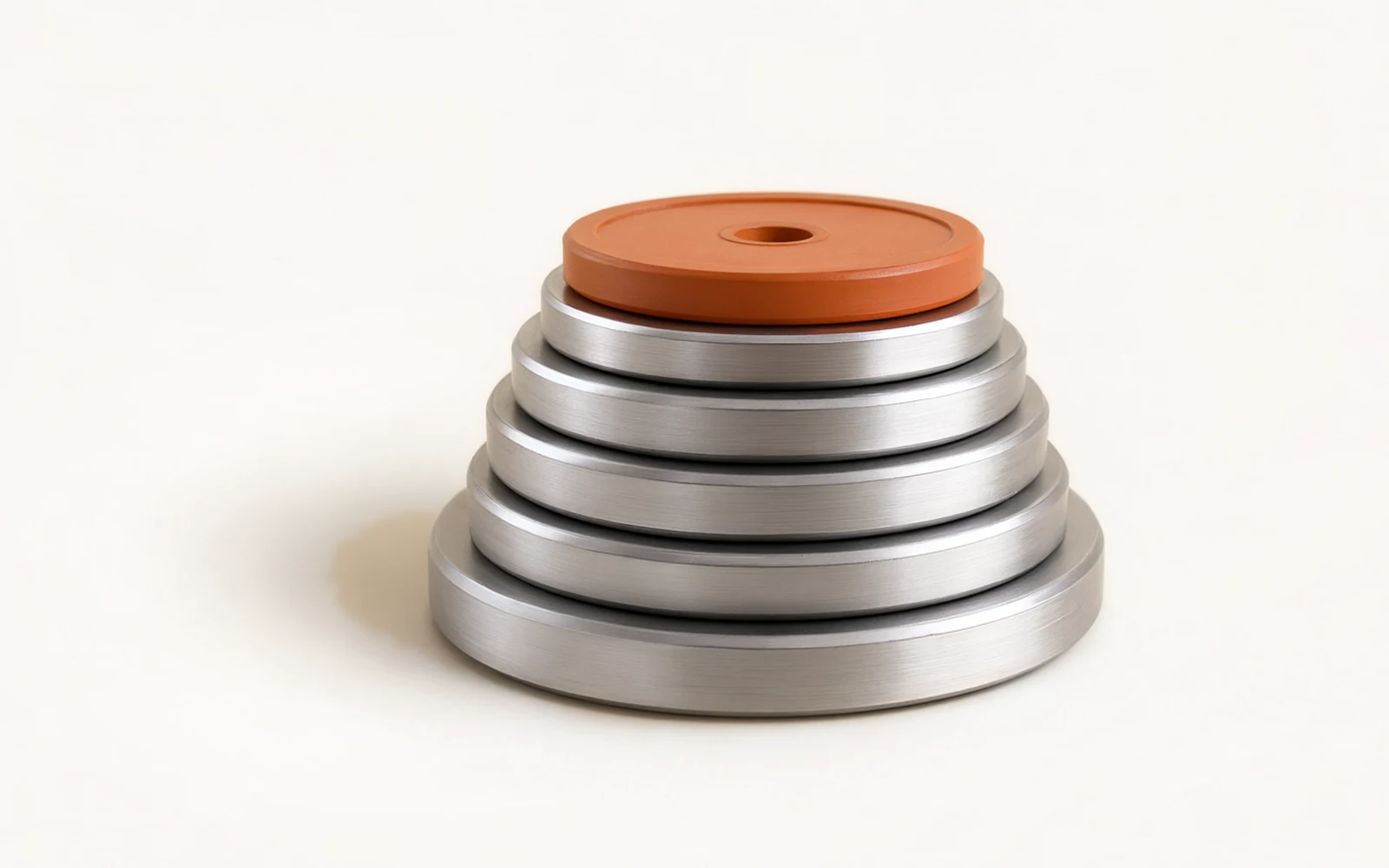
Progressive overload means doing a little more over time: more reps at the same weight, then more weight. The simplest reliable method is double progression: pick a rep range such as 8 to 12, add reps each session, and when every working set reaches 12 at your target effort, add the smallest weight step and start again near 8. Research shows adding reps and adding load both work.
What progressive overload is
Your body adapts to the work you give it. To keep adapting, the work has to rise slowly: more reps, more weight, or occasionally more sets. Tracking it is the whole point, because you cannot add to a number you did not write down.
A 2022 trial by Plotkin and colleagues compared two groups over eight weeks: one added weight each session, the other added reps at the same weight. Both built muscle and strength similarly. The 2026 position stand from the American College of Sports Medicine likewise calls for progressive training with a flexible prescription.
Double progression, step by step
- Pick a rep range for the exercise, such as 6 to 10 or 8 to 12.
- Start with a weight you can do for the bottom of the range with 2 to 3 reps left in the tank.
- Add reps each session where you can, on each set.
- When every working set reaches the top of the range at your target effort, add the smallest available weight step.
- Start again near the bottom of the range with the new weight and repeat.
Worked example: barbell bench press, 3 sets of 6 to 10
| Session | Weight | Reps per set | Next step |
|---|---|---|---|
| 1 | 60 kg | 7, 6, 6 | Add reps |
| 2 | 60 kg | 8, 7, 7 | Add reps |
| 3 | 60 kg | 9, 9, 8 | Add reps |
| 4 | 60 kg | 10, 10, 10 | Add weight |
| 5 | 62.5 kg | 7, 7, 6 | Add reps |
The weight stays the same until every set reaches the top of the range. That rule stops you from jumping up after one good set and then stalling.
| Set 1 | Set 3 | |
|---|---|---|
| Session 1 | 7 | 6 |
| 2 | 8 | 7 |
| 3 | 9 | 8 |
| 4 | 10 | 10 |
| 5 | 7 | 6 |
Rules that keep progress going
- Keep form and range of motion the same. A heavier lift with half the range is not progress.
- Use the smallest step you have. A jump above about 5 percent of the load often drops you to the bottom of the range or below it.
- If the next step is too big, go 1 or 2 reps above your range before moving up. Microplates or a cable stack with small increments also help.
- One bad day is not a trend. Repeat the targets. Change the plan only after the same stall repeats.
- New exercises settle first. Your first sessions on a new exercise are mostly learning. Give it two sessions before judging progress.
Use the next weight calculator to see what to do next time from your last session.
How Lifto progresses you
Lifto uses double progression by default. Your first session on an exercise is a calibration session: you pick a weight you can control for the bottom of the range, and that result sets your next target. Lifto never guesses your starting weights from age or bodyweight.
After that, when every working set reaches the top of the range at the planned effort, and the smallest weight step you have is no more than 5 percent of the load, the next session moves up. New exercises and bigger jumps need a second confirming session first. If the step is bigger than 5 percent, Lifto holds the weight and lets you go up to 2 reps above the range instead. One hard session repeats the target rather than rewriting your plan. Only sessions where you logged every set and how hard it felt count; missing effort never counts as success.
Questions
How much weight should I add each week?
The smallest step your equipment allows, and only after you hit the top of your rep range on every set. For most exercises that is 1 to 2.5 kg (2.5 to 5 lb). A jump of more than about 5 percent of the load usually costs more reps than it should.
What if I cannot add reps or weight?
One flat session is normal. Repeat the same targets next time. If several exercises stall for a couple of weeks, look at sleep, food and effort, and consider an easier week.
Is adding reps progressive overload?
Yes. A 2022 trial found adding reps at the same load built muscle and strength about as well as adding load. Reps are often the easier way to progress small exercises like lateral raises.
My dumbbells jump by 2 kg. What do I do?
When the next step is a big relative jump, stay at your weight and add a rep or two above your range first. Then move up and accept starting lower in the range.